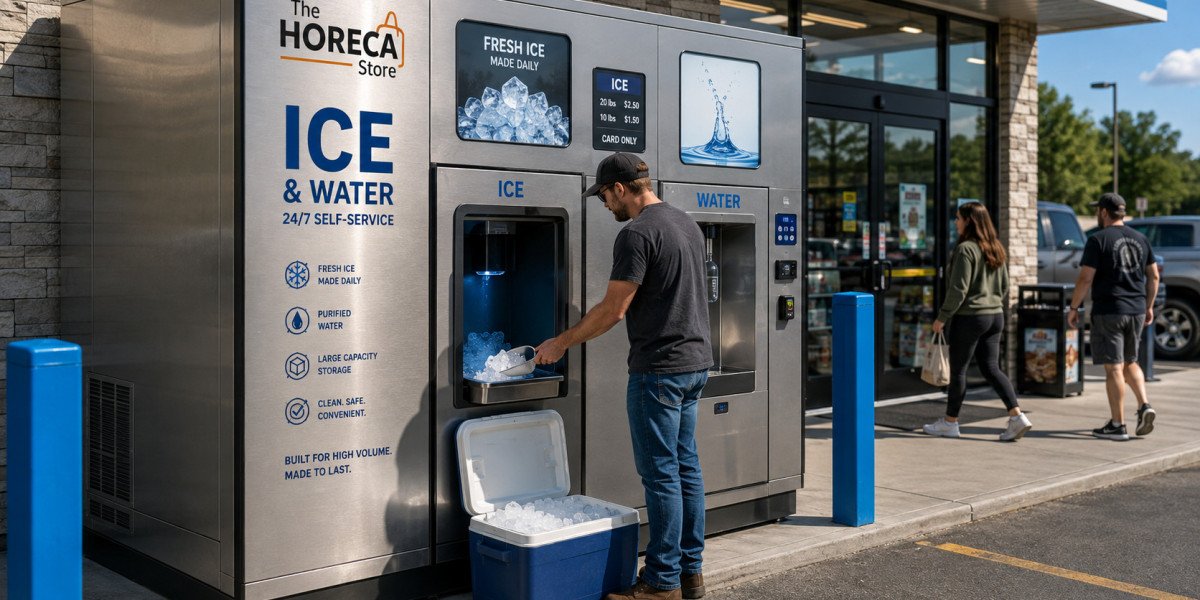
Access to clean, convenient, and readily available ice is important for many businesses and public-facing locations. Restaurants, convenience stores, hotels, gas stations, campgrounds, event venues, recreational facilities, and other commercial operations may need to provide ice throughout the day. Traditional ice storage and manual dispensing can require additional labor and management, which is why ice making vending machines have become an increasingly practical option for businesses looking for convenient ice and water dispensing solutions.
Unlike conventional ice machines that simply produce ice for internal use, vending-style systems can combine ice production, storage, and customer dispensing in one solution. Depending on the equipment, customers or employees may be able to purchase or dispense ice directly without requiring staff to handle every transaction.
The Horeca Store for businesses considering a self-service ice solution, understanding how ice making vending machines work, where they can be used, and what factors should be considered before purchasing can help with better equipment planning.
What Are Ice Making Vending Machines?
ice making vending machines are commercial systems designed to produce, store, and dispense ice for customers or employees. Some models can also provide drinking water or purified water through an integrated dispensing system.
These machines can be particularly useful in locations where people need convenient access to packaged or dispensed ice without entering a traditional retail store.
Depending on the model, an ice vending system may include:
Commercial ice production
Ice storage
Ice dispensing
Water dispensing
Self-service controls
Payment capabilities
Digital interfaces
Automated packaging features
The exact capabilities depend on the equipment configuration and manufacturer's specifications.
How Do Ice Making Vending Machines Work?
The basic operation combines refrigeration, ice production, storage, and dispensing.
Ice Production
The machine uses a commercial ice-making system to produce ice.
The type, size, and production capacity of the ice can vary depending on the specific machine.
Ice Storage
Once produced, ice is stored inside an insulated storage area until it is dispensed.
The storage capacity determines how much ice can be available between production cycles and customer demand.
Customer Dispensing
Customers or employees can use the machine's dispensing interface to receive ice.
In self-service applications, the system can reduce the need for staff involvement.
Water Dispensing
Some systems combine ice and water dispensing capabilities.
This can make the equipment useful for locations where customers want convenient access to both products.
Why Are Ice Making Vending Machines Useful?
The main advantage of vending-style ice equipment is convenience.
Traditional ice sales may require employees to retrieve bags from a freezer, process a transaction, or manage customer requests.
A self-service system can simplify this process.
Convenient Self-Service
Customers can obtain ice without requiring extensive staff assistance.
This can be particularly useful during busy periods or at locations with extended operating hours.
Reduces Staff Workload
Automated dispensing can reduce the amount of time employees spend handling routine ice transactions.
Staff can focus on other responsibilities.
Potential Revenue Opportunity
Businesses can use ice vending equipment as an additional product or service, depending on the location and operating model.
Convenient for Customers
Ice can be especially important for travelers, campers, outdoor events, parties, and customers transporting perishable products.
Providing convenient access can improve the overall customer experience.
Where Can Ice Making Vending Machines Be Used?
Convenience Stores
Convenience stores can offer self-service ice as an additional purchase option.
The machine can be positioned near the storefront or another accessible location.
Gas Stations
Gas stations often serve customers who need beverages, coolers, and ice while traveling.
An ice vending machine can provide a convenient option for customers who want to purchase ice quickly.
Campgrounds
Campgrounds and outdoor recreational areas can benefit from convenient ice availability.
Customers may need ice for food storage, beverages, coolers, and outdoor activities.
Hotels and Resorts
Hotels, resorts, and recreational properties may provide ice access for guests.
A commercial dispensing system can help supplement traditional guest ice facilities.
Event Venues
Event venues may require substantial quantities of ice for beverages and temporary foodservice operations.
Recreational Facilities
Sports complexes, parks, marinas, and other recreational locations can consider ice vending equipment where demand supports it.
Key Features to Consider
Not all ice making vending machines are designed for the same environment.
Businesses should compare features based on their intended application.
Ice Production Capacity
Production capacity indicates how much ice the machine can produce over a specified period.
Businesses should estimate average and peak demand before selecting equipment.
Storage Capacity
Storage capacity determines how much ice can be available for dispensing.
A machine with insufficient storage may require frequent replenishment or may struggle during high-demand periods.
Dispensing System
The dispensing mechanism should be convenient and suitable for the intended users.
Businesses should review how ice is dispensed and how customers interact with the equipment.
Water Dispensing
If water service is important, businesses can consider models that combine ice and water dispensing.
Payment System
Self-service machines may support different payment methods depending on their design.
Businesses should verify compatibility with their intended payment process.
User Interface
A simple interface can make the machine easier for customers to use.
Clear instructions can reduce confusion and improve the self-service experience.
Choosing the Right Ice Making Vending Machines
Selecting an ice vending system requires careful planning.
Estimate Customer Demand
Start by estimating how much ice customers are likely to purchase.
Consider:
Customer traffic
Seasonal demand
Location
Nearby competition
Weather conditions
Event schedules
Operating hours
Peak demand periods
Outdoor recreational locations may experience significantly different demand patterns than indoor retail stores.
Consider Available Space
Measure the planned installation area carefully.
Consider:
Machine dimensions
Customer access
Service access
Electrical requirements
Water connection requirements
Drainage
Clearance
Local installation requirements
The equipment should be positioned where customers can use it safely and conveniently.
Evaluate Maintenance Requirements
Ice-making equipment requires regular cleaning and maintenance.
Before purchasing, businesses should understand the manufacturer's recommended maintenance schedule and service requirements.
Benefits for Commercial Operations
Convenient Ice Availability
Businesses can provide ice without requiring customers to enter a store or wait for staff assistance, depending on the setup.
Efficient Self-Service
Automated dispensing can streamline routine customer interactions.
Extended Availability
Depending on the business location and operating arrangement, a vending machine can provide ice beyond normal staffed service hours.
Reduced Manual Handling
Automated dispensing can reduce the need for employees to manually handle ice during every customer transaction.
Additional Product Offering
For some businesses, ice vending can complement existing beverage, convenience, or recreational services.
Hygiene and Sanitation
Cleanliness is particularly important for any equipment that produces or dispenses ice or drinking water.
Businesses should follow the manufacturer's cleaning and sanitation procedures.
A maintenance program may include:
Cleaning ice-contact surfaces
Cleaning dispensing areas
Inspecting water connections
Cleaning accessible components
Checking storage areas
Following sanitation recommendations
Scheduling professional service when required
Employees should also monitor the machine for spills, debris, or other visible issues.
Regular cleaning can help maintain a professional customer-facing environment.
Maintaining Ice Making Vending Machines
Regular maintenance can support reliable operation.
Important maintenance activities may include:
Inspecting Ice Production Components
Follow the manufacturer's recommended procedures for inspecting and servicing the ice-making system.
Cleaning Dispensing Areas
The dispensing area should be kept clean and free of debris.
Checking Water Systems
For models that dispense water, appropriate inspection and maintenance of water-related components are important.
Monitoring Performance
Businesses should monitor ice production, dispensing, and other operational functions.
Unexpected changes may indicate that service is required.
Professional Servicing
Commercial ice equipment should receive professional service according to manufacturer recommendations and operational requirements.
Improving Operational Efficiency
Businesses can improve the performance of an ice vending operation through proper planning.
Position the Machine Strategically
Place the equipment in an easily visible and accessible location.
Provide Clear Instructions
Customers should understand how to operate the machine and complete a purchase or dispensing process.
Monitor Inventory and Demand
Track sales and usage patterns to identify peak periods.
Maintain Regular Cleaning
A clean machine creates a better customer experience and supports proper sanitation practices.
Schedule Preventive Maintenance
Regular servicing can help reduce unexpected operational interruptions.
Common Mistakes to Avoid
Choosing Equipment Without Estimating Demand
A machine that cannot keep up with peak demand may create customer frustration.
Ignoring Installation Requirements
Water, drainage, electricity, space, and access should be considered before installation.
Neglecting Maintenance
Ice machines require routine cleaning and maintenance.
Poor Placement
A machine hidden behind other equipment or located in an inconvenient area may receive less customer use.
Failing to Plan for Peak Seasons
Ice demand can increase significantly during warm weather, holidays, travel seasons, and outdoor events.
Businesses should consider peak demand rather than average demand alone.
Ignoring Customer Accessibility
The machine should be positioned so customers can approach and use it conveniently.
Ice Making Vending Machines vs. Traditional Ice Machines
Traditional commercial ice machines are often designed primarily to produce ice for a business's internal operations.
For example, a restaurant may use an ice machine to supply ice for beverages and foodservice activities.
ice making vending machines, on the other hand, are designed around dispensing ice to customers or users.
A restaurant may therefore prefer a conventional commercial ice maker for kitchen operations, while a convenience store, campground, or roadside business may find a vending-style system more suitable for customer-facing ice sales.
The correct choice depends on the intended application, demand, available space, and operational model.
The Horeca Store and Commercial Ice Solutions
The Horeca Store provides professional refrigeration and foodservice equipment for restaurants, hospitality businesses, retail operations, and other commercial applications.
For businesses considering ice making vending machines, factors such as production capacity, storage volume, dispensing functionality, water requirements, installation space, maintenance, customer accessibility, and expected demand should all be evaluated.
A commercial ice and water vending solution can be a practical option for businesses that want to provide convenient self-service access to ice.
By selecting equipment according to actual operational requirements, businesses can create an efficient ice dispensing solution while maintaining a professional customer experience.
Conclusion
ice making vending machines provide a convenient way to combine commercial ice production, storage, and self-service dispensing. They can be useful for convenience stores, gas stations, campgrounds, hotels, resorts, event venues, recreational facilities, and other locations where customers need quick access to ice.
When selecting an ice vending machine, businesses should consider production capacity, storage capacity, dispensing functionality, water availability, payment options, installation requirements, customer access, sanitation, and maintenance.
Demand planning is especially important. Seasonal weather, customer traffic, holidays, outdoor events, and location can all affect ice consumption.
Regular cleaning and preventive maintenance are equally important for maintaining reliable operation and a professional customer-facing environment.
For businesses looking to expand their product offerings or provide convenient self-service ice access, the right ice making vending machines can support operational efficiency and customer convenience.
With commercial ice and water solutions available through The Horeca Store, businesses can explore equipment designed to meet their specific refrigeration, dispensing, and foodservice requirements.